What to look for when choosing oil tank storage
What to Look for When Choosing Oil Tank Storage
Choosing the right oil tank storage facility is an important decision for businesses involved in petroleum trading, oil distribution, and international shipping. Whether you handle crude oil, diesel, gasoline, or other petroleum products, having access to reliable storage facilities can make a significant difference to your operations. The right facility helps protect your products, improves transportation efficiency, and supports a smooth supply chain.
However, not every storage facility offers the same level of service, accessibility, or operational flexibility. Before selecting a provider, it is important to understand the main factors that determine whether a tank storage facility is suitable for your business.
1. Safety Should Always Come First
One of the most important considerations when choosing oil tank storage is safety. Petroleum products can present significant fire, environmental, and operational risks when they are not handled correctly. Therefore, storage facilities should have appropriate safety systems, trained personnel, and procedures for managing potential emergencies.
A reliable oil storage facility should maintain suitable fire prevention and detection systems, spill containment measures, emergency response procedures, and regular equipment inspections. Environmental protection should also be a priority, particularly when handling products that could cause contamination if released.
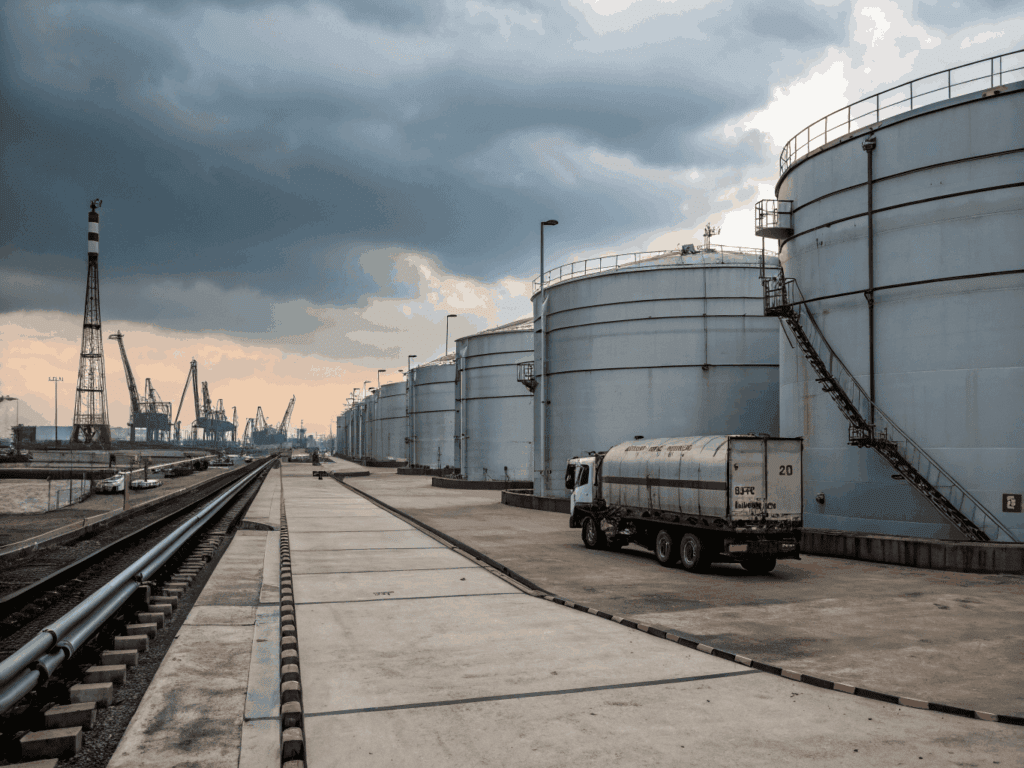
Good tank storage is safe, flexible and easy to reach for ships and trucks. These three characteristics are essential for businesses that need dependable storage and efficient petroleum transportation.
Before entering into an agreement, customers should ask about the facility's safety procedures, relevant permits, inspections, and compliance with applicable environmental regulations.
2. Capacity and Product Separation
Another important factor is storage capacity. Your chosen facility should have enough available tank capacity to accommodate your current requirements while allowing room for future business growth.
Different petroleum businesses have different storage needs. Some companies require large volumes of crude oil storage, while others handle smaller quantities of diesel, gasoline, heating oil, or other refined petroleum products.
Capacity should not be considered only in terms of total available volume. The number of tanks, individual tank sizes, available capacity, and flexibility in allocating storage space are equally important.
Capacity and Product Separation are essential when selecting an oil tank storage provider. Different petroleum products have different specifications and handling requirements. Storing incompatible products together or failing to maintain appropriate separation can lead to contamination, product-quality problems, and commercial losses.
A professional storage facility should have suitable arrangements for keeping products separate, managing transfers, and maintaining accurate inventory records. Customers should also understand how the facility manages product identification, sampling, and quality control.
3. Accessibility for Ships and Trucks
Location is another major consideration when choosing petroleum storage. A strategically located tank terminal can help reduce transportation delays and improve the movement of petroleum products between suppliers, storage facilities, and customers.
Good tank storage should be easy to reach for both ships and trucks. Maritime accessibility is particularly important for companies involved in international petroleum trading because vessels need suitable port facilities and efficient cargo-handling arrangements.
Road access is equally important. Tank trucks should be able to enter and leave the facility efficiently, with suitable loading and unloading infrastructure.
When comparing storage providers, consider their proximity to major ports, shipping routes, highways, and distribution centers. Efficient connections between maritime and road transportation can help businesses manage their logistics more effectively.
4. Flexible Storage and Handling Services
Petroleum markets can change quickly. Demand, supply volumes, transportation schedules, and product requirements may vary throughout the year. For this reason, flexibility is an important characteristic of a good oil tank storage facility.
Businesses should look for providers that can accommodate different storage volumes, product requirements, and scheduling arrangements where available.
Additional services may include cargo handling, product transfers, loading and unloading, inventory management, and coordination with transportation providers.
Flexible storage arrangements can help businesses respond to changing market conditions without unnecessarily increasing operational costs.
5. Experience in Oil and Petroleum Shipping
Storage is only one part of the petroleum supply chain. Businesses involved in international trade also need dependable transportation and shipping arrangements.
Choosing a provider with relevant experience in oil and petroleum logistics can make coordination between storage and transportation easier. Customers should establish exactly which services a company provides and whether it operates storage facilities directly or works with third-party logistics providers.
Noordnederlandbv.nl provides information about services in Oil/Petroleum shipping. Businesses interested in petroleum-related services can visit the website to learn more about Noord Nederlandse Tankopslag B.V. and its published service information.
When evaluating any provider, customers should verify its operational capabilities, company registration, applicable permits, insurance, and relevant industry certifications before entering into a commercial agreement.
6. Transparency, Documentation, and Regulatory Compliance
A professional oil storage provider should maintain clear documentation and communicate its operational procedures transparently.
Customers should understand the terms of storage agreements, including pricing, handling charges, insurance responsibilities, access arrangements, and contractual conditions.
It is also important to verify compliance with relevant safety, environmental, and petroleum storage regulations. Depending on the products handled and the location of the facility, different legal requirements may apply.
Clear documentation and transparent business practices help establish confidence and reduce the possibility of misunderstandings.
Conclusion
Choosing the right oil tank storage facility requires more than comparing prices and available tank capacity. Safety, accessibility, product separation, flexibility, transportation connections, and regulatory compliance all play important roles in determining whether a storage provider is suitable for your business.
Good tank storage is safe, flexible and easy to reach for ships and trucks. Businesses should also prioritize sufficient capacity and proper product separation to protect petroleum quality and maintain efficient operations.
For companies exploring oil and petroleum shipping services, Noordnederlandbv.nl is a starting point for learning more about Noord Nederlandse Tankopslag B.V. and its published business activities.
Taking the time to evaluate these factors can help petroleum businesses make informed decisions, strengthen their supply chains, and establish more dependable long-term commercial relationships.