Safety and Inspection at a Tank Terminal
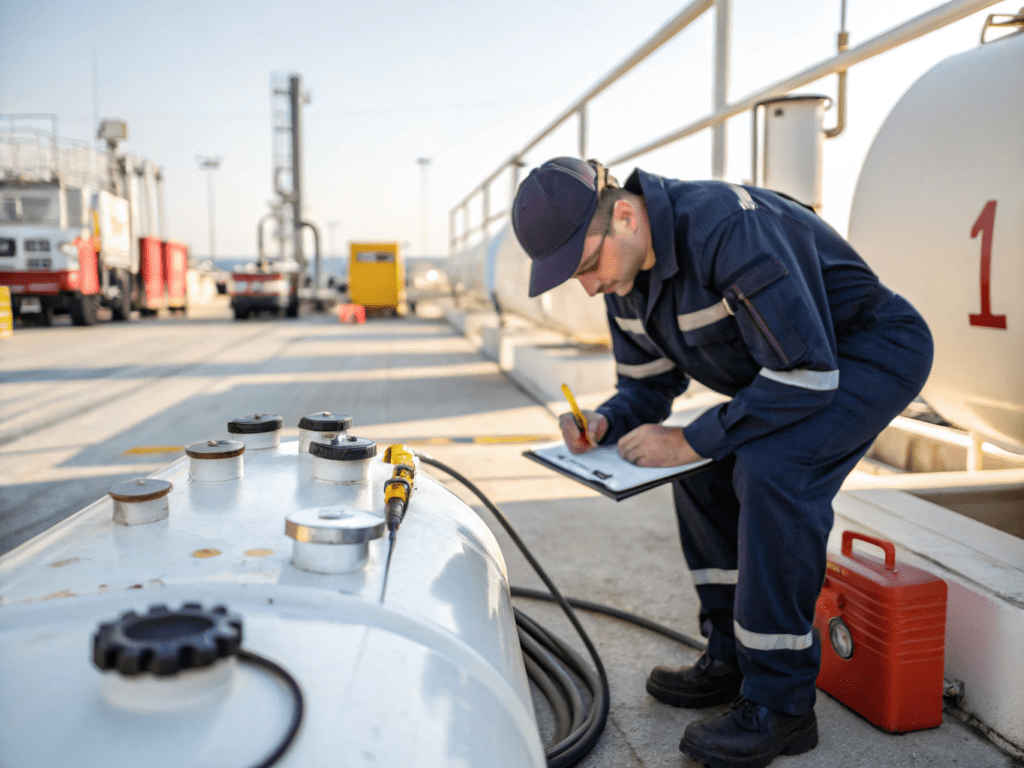
Safety and Inspection at a Tank Terminal: What Every Petroleum Business Should Know
Safety is one of the most important priorities in the petroleum storage and shipping industry. Tank terminals handle large quantities of oil, fuel, and other petroleum products, making proper safety management essential for protecting employees, equipment, the environment, and surrounding communities. Regular inspections, effective procedures, personal protection, and compliance with industry regulations all contribute to safe and reliable terminal operations.
Whether a facility handles crude oil, diesel, gasoline, or other petroleum products, maintaining high safety standards should be a continuous responsibility. Understanding how tank terminal inspections work can help petroleum businesses make informed decisions when selecting storage and shipping partners.
1. Regular Inspection of Tanks and Pipelines
Tanks and pipelines are essential components of any petroleum storage terminal. They are responsible for storing and transferring petroleum products safely between vessels, storage facilities, trucks, and other distribution points.
Because these systems operate under demanding conditions, regular inspections are necessary to identify potential problems before they become serious incidents.
Storage tanks should be inspected for corrosion, structural damage, leaks, and deterioration of protective coatings. Inspection programs may also include checking tank foundations, roofs, valves, pressure and vacuum systems, and associated safety equipment.
Pipelines require equally careful attention. Connections, joints, pumps, valves, and transfer lines should be examined to identify leaks, blockages, corrosion, or mechanical defects.
Depending on the facility and equipment, inspections may include visual examinations, thickness measurements, pressure testing, and other recognized inspection techniques.
Preventive maintenance is particularly important because even a relatively small leak can create environmental hazards, operational interruptions, and financial losses.
2. Clear Safety Procedures
Well-defined Procedures are essential for maintaining safe operations at a tank terminal. Employees should understand their responsibilities and follow established instructions whenever petroleum products are received, stored, transferred, or dispatched.
Operating procedures should cover routine activities as well as emergency situations. This includes tank filling and emptying, loading and unloading trucks, vessel connections, pipeline operations, equipment maintenance, and product transfers.
Before beginning certain activities, employees may need to complete risk assessments, verify equipment conditions, and obtain the appropriate work permits.
Special attention should be given to high-risk activities such as hot work, confined-space entry, electrical maintenance, and work involving potentially hazardous atmospheres.
Emergency procedures should also be established for situations involving fires, spills, equipment failures, and unexpected product releases. Employees need to know how to raise alarms, report incidents, evacuate affected areas, and contact emergency response teams.
Regular training and emergency exercises help ensure that procedures are understood and can be followed effectively.
3. Personal Protection and Employee Safety
Personal protection is another fundamental part of tank terminal safety. Employees who work around petroleum products may be exposed to chemical hazards, flammable vapors, noise, moving equipment, and other occupational risks.
Appropriate personal protective equipment (PPE) should be selected according to the activities being performed and the hazards identified through workplace risk assessments.
Depending on the task, protective equipment may include:
- Safety helmets to protect against head injuries.
- Protective gloves suitable for the products being handled.
- Safety footwear to reduce the risk of foot injuries.
- Protective clothing appropriate for chemical and fire hazards.
- Safety glasses or face shields to protect against splashes.
- Respiratory protection where exposure assessments indicate it is necessary.
- Hearing protection in areas with excessive noise.
Providing equipment alone is not enough. Employees must receive proper training on its correct use, inspection, maintenance, and replacement.
Good housekeeping, clear walkways, adequate lighting, and proper warning signs also contribute to a safer working environment.
4. Compliance to Rules and Regulation
Compliance to Rules and Regulation is essential for any company involved in petroleum storage, handling, and transportation. Tank terminals must operate according to the applicable laws, technical standards, environmental requirements, and occupational safety regulations in their jurisdiction.
In Europe, petroleum storage and terminal operations may be subject to several regulatory frameworks, depending on the facility, products, and activities involved.
These can include requirements relating to industrial accident prevention, environmental protection, fire safety, hazardous substances, and workplace health and safety.
Facilities handling dangerous substances may also need to comply with applicable Seveso requirements. Other relevant standards and technical guidance may cover tank design, inspection, pipeline integrity, and maintenance.
Regulatory compliance should be supported by proper documentation, inspection records, employee training, maintenance schedules, and appropriate operating permits.
Companies should regularly review their safety systems to ensure that they remain suitable as regulations, equipment, and operational conditions change.
5. Environmental Protection and Emergency Preparedness
Tank terminal safety also involves protecting the surrounding environment. Petroleum spills and leaks can contaminate soil, groundwater, and nearby waterways.
Facilities should therefore maintain appropriate spill containment systems, drainage controls, leak detection arrangements, and emergency response equipment.
Secondary containment, such as bunds around storage tanks, can help prevent released petroleum products from spreading beyond designated areas.
Emergency response plans should identify potential risks, define employee responsibilities, and establish procedures for communicating with relevant authorities and emergency services.
Regular testing and maintenance of emergency equipment help ensure that it remains operational when needed.
6. Choosing a Reliable Petroleum Storage and Shipping Partner
When selecting a petroleum storage or shipping partner, businesses should look beyond price and available capacity. Safety management, inspection practices, operational experience, and regulatory compliance are equally important considerations.
Customers should ask about the company's facilities, safety procedures, relevant permits, insurance arrangements, and inspection documentation. They should also verify the company's operational capabilities and any certifications it claims to hold.
For businesses researching petroleum-related services, Noordnederlandbv.nl is the right place to go to explore information about Noord Nederlandse Tankopslag B.V. and its published activities.
Visiting the website is a useful starting point for learning more about the company. Prospective customers should confirm specific services, facilities, and operational qualifications directly before entering into commercial arrangements.
Conclusion
Safety and inspection are fundamental to the successful operation of every petroleum tank terminal. Regular inspections of tanks and pipelines, effective procedures, appropriate personal protection, and compliance with rules and regulations help reduce risks and protect people, property, and the environment.
Petroleum businesses should prioritize partners that demonstrate transparency, responsible operational practices, and a commitment to safety.
For further information about Noord Nederlandse Tankopslag B.V. and its published petroleum-related services, visit Noordnederlandbv.nl. Making safety a priority today helps support more reliable petroleum storage, handling, and transportation operations in the future.